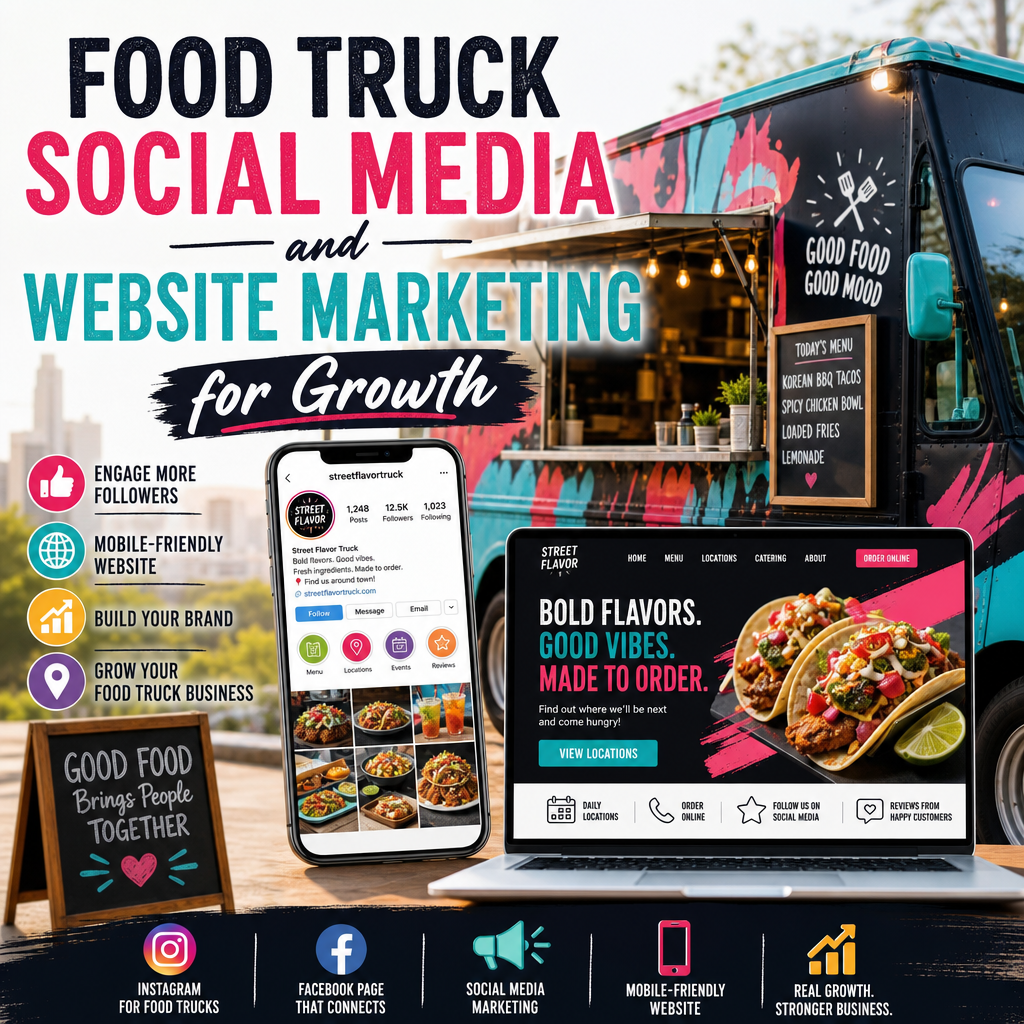
Food Truck Social Media and Website Marketing for Growth
How Social Media and Websites Work Together for Food Trucks
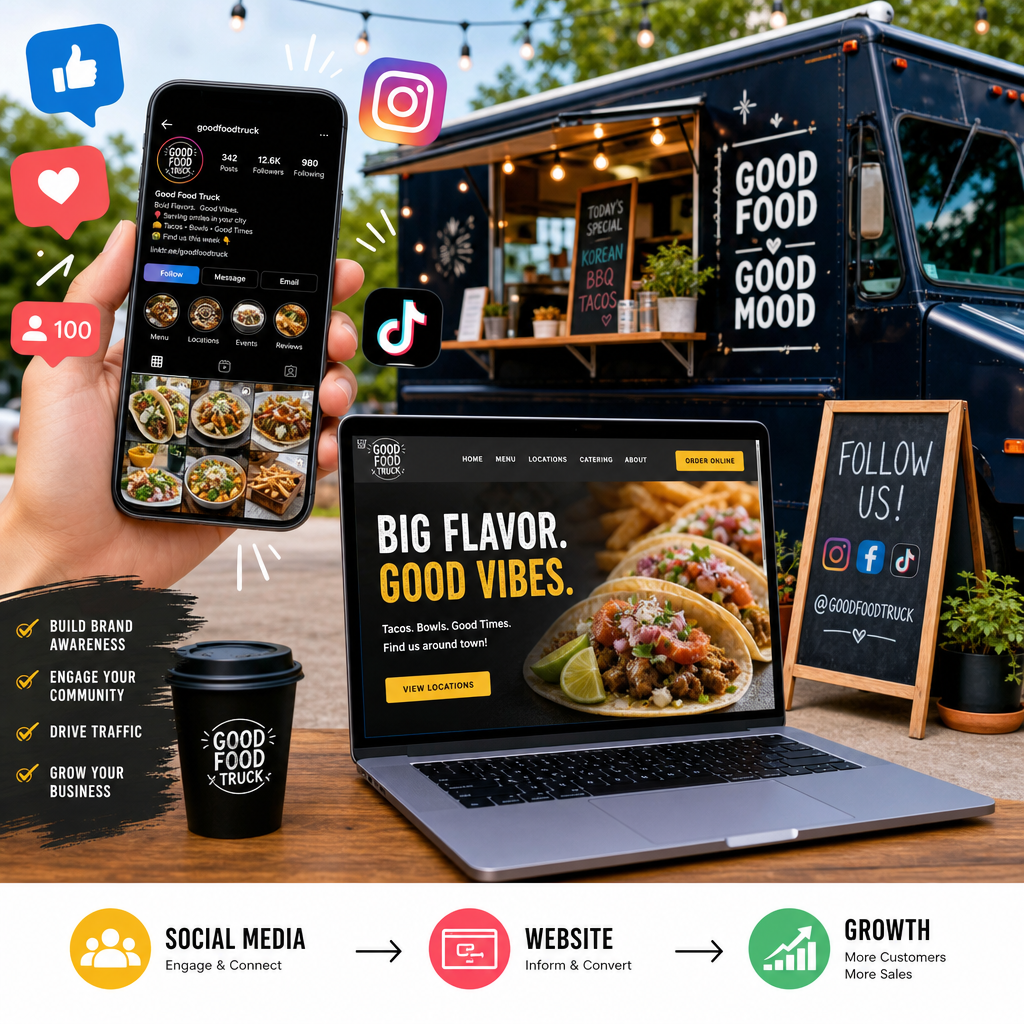
Food trucks move fast, and your marketing needs to keep up. That is why food truck social media and a food truck website should never work as separate tools. Each one plays a different role, and together they create a stronger, more reliable online presence.
If you rely on only one, you are leaving money on the table. Social platforms help people discover you quickly. Your website helps them trust you, find you, and take action. For food truck marketing, that combination is hard to beat.
Why Social Media Matters for Food Trucks
Social media is often the first place people see your truck. A great photo of a special, a quick story about your location, or a post about a sold-out event can spread fast. That makes social media marketing especially valuable for mobile businesses.
For food trucks, social media works because it is:
- Fast and flexible
- Visual and engaging
- Great for local discovery
- Easy to update in real time
Platforms like Instagram and Facebook are perfect for daily updates. Instagram for food trucks can showcase menu items, behind-the-scenes prep, customer photos, and live location announcements. A strong food truck Facebook page can also help you reach local communities, share event details, and build repeat traffic.
With the right food truck Instagram marketing, you can create excitement before lunch rushes, weekend events, and seasonal menu drops. That kind of food truck customer engagement helps people feel connected to your brand.
Why You Still Need a Website
Social media is powerful, but it is not enough on its own. Algorithms change, posts disappear in busy feeds, and not every customer uses the same app. A food truck website gives your business a permanent home online.
A website makes it easy for customers to:
- Check your current location
- View your menu
- Find your hours
- Book catering or private events
- Contact you directly
- Learn your story
A mobile-friendly website is especially important for food trucks because most people will visit it from their phones. They may be standing in line, looking for your truck, or trying to decide where to eat next. If your site is slow or hard to use, you may lose them in seconds.
A good website also supports food truck branding. It gives your business a professional look and helps you stand out from competitors. Even a simple site can make a huge difference in trust and credibility.
Social Media Brings Attention, Websites Convert It
Think of social media as the loudspeaker and your website as the storefront. Social media grabs attention, while the website turns interest into action.
Here is how they work together:
Social media drives discovery
People see your posts, reels, stories, and updates. They learn where you are and what you serve. This is where food truck social media shines.
The website gives people details
Once someone is interested, they want more information. Your website can answer common questions without making them search through old posts.
Both support decision-making
Customers are more likely to visit, order, or book when they can quickly find everything they need in one place.
Each platform reinforces the other
Your social profiles can link to your website, and your website can link back to your social pages. That creates a strong loop for digital marketing for food trucks.
A Strong Online Presence Builds Trust
Today’s customers expect businesses to be easy to find online. If they search for your truck and only see a social page with no website, they may wonder how official or current your business is.
A solid online presence shows that your truck is active, organized, and worth visiting. It also helps with local business marketing, because people in your area are more likely to choose a food truck that looks established and easy to follow.
When your website and social channels match in tone, design, and messaging, your business feels more memorable. That is a big part of effective restaurant social media and modern food truck marketing.
What to Include on Each Platform
To get the best results, use each channel for what it does best.
On social media:
- Daily or weekly location updates
- New menu item photos
- Short videos and behind-the-scenes content
- Event announcements
- Polls, comments, and customer replies
On your website:
- Menu with clear prices
- Location schedule
- Catering inquiry form
- Contact information
- Story about your truck and team
- Links to your social accounts
This balance helps your food truck business growth by making it easy for people to discover you, follow you, and buy from you.
The Best Results Come From Using Both
A food truck that uses only social media can disappear when a platform changes. A food truck that uses only a website may struggle to stay visible in a crowded market. But when both are used together, they create a stronger system.
That is the real power of social media marketing for food trucks. Social platforms bring in fresh attention every day. Your website turns that attention into trust, orders, and repeat visits.
If you want long-term success, treat your website and social channels as one connected strategy. That is how you build a stronger brand, reach more locals, and support lasting food truck business growth.
Final Thought
For modern food trucks, the question is not whether to choose social media or a website. You need both. One gets people excited. The other helps them take the next step.
When your food truck social media and food truck website work together, your marketing becomes easier, smarter, and more effective. That is the foundation of strong food truck branding, better customer engagement, and a more profitable business.